Primitive Skills for Beginners: Learning the Old Ways
Primitive Skills for Beginners: Learning the Old WaysThere’s something about getting your hands dirty that changes you.Maybe it’s the first time you twist a coal out of a hand drill, or the smell of smoke clinging to your clothes after sitting by a fire you made yourself.Primitive skills pull you back into rhythm with the land — a rhythm most of us forgot was still beating.
These aren’t just “survival” tricks. They’re the oldest human technologies, the things that kept our ancestors alive long before any of us had a credit card or a lighter.Learning them isn’t about pretending to live in the past — it’s about remembering what it means to be capable, observant, and connected.
What Primitive Skills Actually Are
Primitive skills are the hands-on, dirt-under-your-nails knowledge of how to live with what’s around you — fire, water, stone, hide, and wood.They’re not about “escaping society.” They’re about knowing that you could stand on your own two feet if you had to, and that you can find a sense of belonging through doing things the hard way.
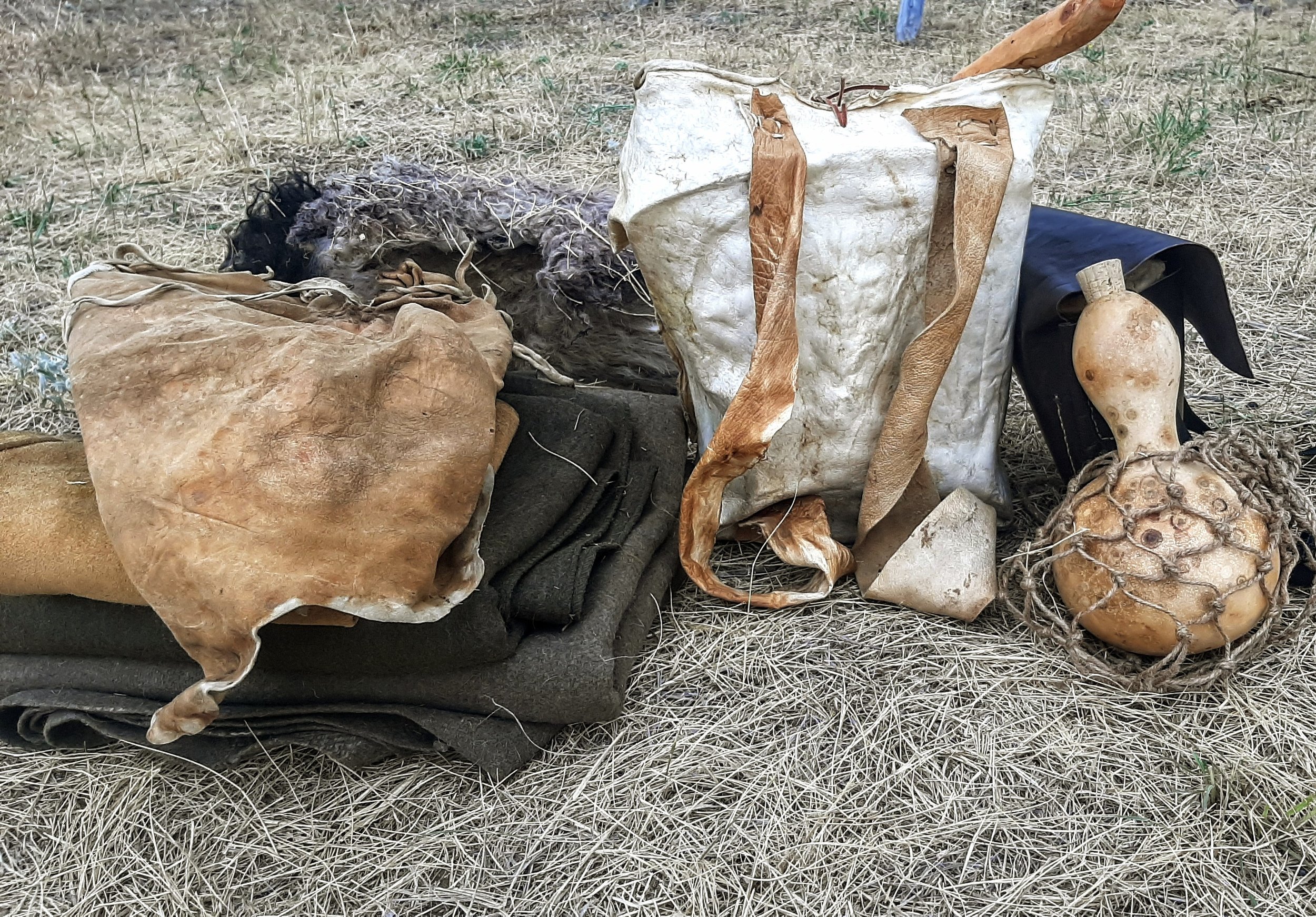
When you practice these skills, you start to see nature differently. A yucca stalk becomes a drill. Dogbane becomes rope. A deer hide becomes warm, soft buckskin.Nothing is just a “thing” anymore — it’s material, it’s potential, it’s part of a bigger relationship.
The Mindset That MattersMost people want to jump straight into making fires or building shelters. But primitive skills aren’t about collecting tricks — they’re about patience and awareness.
You’ll fail a lot at first. Your cordage will snap. Your spindle will glaze. Your shelters will leak.That’s all part of it. The land doesn’t hand out shortcuts. You earn every spark and every lesson, and that’s exactly why it feels real.
If you go into it expecting mastery, you’ll burn out.If you go into it wanting to understand, you’ll start to change the way you see everything.
Five Core Primitive Skills to Start With
1. Fire by Friction
Fire made by friction is the most humbling skill there is. It’s not about muscle — it’s about rhythm, posture, and breath.When the first wisp of smoke curls out of your notch and you coax it into flame, it’s a feeling like nothing else. You realize you didn’t “make” fire — you earned it.
Two main methods are most common for beginners: the hand drill and the bow drill. Both are ancient. Both will teach you patience.
The Hand Drill
The hand drill is the simplest, purest way to make fire — just your hands, a spindle, and a hearth board. No cord, no bow, no bearing block. It’s takes practice, but once you learn it, it feels as natural as breathing.
You’ll start by spinning a dry spindle between your palms, pressing it into a notched hearth board. The key is consistency — finding that smooth, steady rhythm where smoke becomes heat, and heat becomes ember.
Common Spindle Materials (USA):
Mullein (Verbascum thapsus)
Seep willow (Baccharis salicifolia)
Horseweed (Conyza canadensis)
Goldenrod (Solidago spp.)
Blackberry (Rubus spp.)
Yucca (Yucca spp.)
Sotol (Dasylirion wheeleri)
Good Hearth Board Woods:
Cottonwood branch or root (Populus spp.)
Sagebrush (Artemisia tridentata)
Western red cedar (Thuja plicata)
White pine (Pinus strobus)
Yucca (Yucca spp.)
Sotol (Dasylirion wheeleri)
The Bow Drill
The bow drill is a little more mechanical, but easier for beginners because it uses leverage instead of pure hand power.With a bow, cord, and bearing block, you can keep even pressure and spin the spindle faster without tearing your palms up.
The setup teaches resourcefulness. You’ll carve a bow from a curved branch, string it with cordage (modern or natural), and use a small stone or block of wood as your bearing piece.
Spindle and Board Woods for Bow Drill:
Tulip poplar (Liriodendron tulipifera)
White pine (Pinus strobus)
Sotol (Dasylirion wheeleri)
Yucca (Yucca spp.)
Western red cedar (Thuja plicata)
Cottonwood (branch or root) (Populus spp.)
Sagebrush (Artemisia tridentata)
Juniper (Juniperus spp.)
These combinations balance hardness and friction. You want a soft board and a slightly harder spindle — that difference helps generate dust that turns to ember.
When you first hear that soft purr of the spindle and smell the hint of smoke, you’ll understand why this skill still matters. It’s not just about fire — it’s about presence, control, and learning to work with nature’s limits.
2. Cordage (Making Rope from Plants)
Cordage might not sound exciting, but it’s one of the most useful things you’ll ever learn. Without rope, you can’t build, bind, hunt, or tan hides.
Plants like dogbane, milkweed, yucca, and nettles can all be turned into strong two-ply cord just by twisting fibers together.It’s repetitive, meditative work. It slows your thoughts down. The world goes quiet and your hands start to remember something ancient.
3. Shelter
Before you ever pick up a stick, look at the land.Where does the wind hit? Where will water flow if it rains? What trees are dead, and which ones are alive?That awareness comes before structure.
Start with a debris hut — a simple leaf-and-stick shelter that teaches insulation, layering, and patience. When you crawl inside one that actually keeps you warm through the night, you’ll understand why “primitive” doesn’t mean “uncomfortable.” It means smart.
4. Stone and Bone Tools
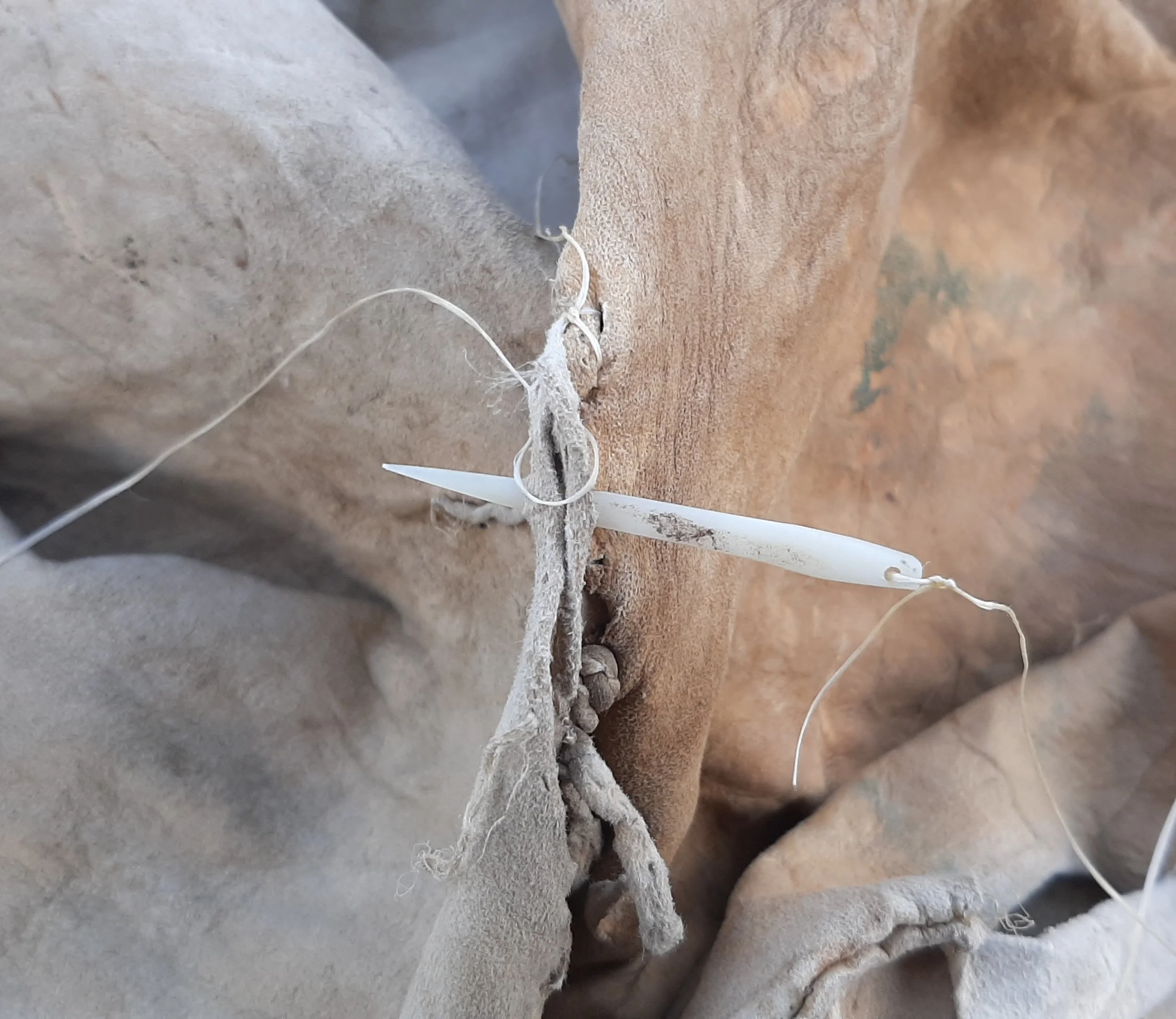
Long before metal, people shaped tools out of whatever they had — stone, antler, bone.Flintknapping (making stone tools) is part skill, part meditation. You’re shaping something that was once just a rock into a blade sharp enough to cut hair. It’s slow work. Every flake that falls changes how you see tools, effort, and time.
You start to realize our ancestors weren’t primitive at all. They were craftsmen, engineers, artists — just using different materials.
5. Hide Tanning
Turning raw hide into buckskin is one of the most rewarding — and most misunderstood — skills there is.It’s not about chemicals or shortcuts. It’s about learning how fat, smoke, and motion can transform skin into something soft, strong, and wearable.
Brain tanning uses the oils from the animal’s own brain to dress the hide.Bark tanning uses tannins from tree bark to create traditional leather.Both require respect — for the animal, the process, and the time it takes.
If you stick with it, you’ll never look at a hide the same way again. You’ll see the work, the beauty, and the life behind it.
More Than Just Skills
Primitive skills will change the way you move through the world.You start noticing small things — wind direction, bird calls, how the light shifts in the trees. You stop rushing. You start listening.
Every time you scrape a hide or twist cordage, you’re not just making something — you’re unlearning modern impatience.You’re remembering that the world still makes sense when you slow down enough to pay attention.
Why It Matters Now
We live in a world where everything is instant — food, warmth, entertainment, even “connection.” But none of it lasts.Primitive skills bring you back to things that do. They build confidence, gratitude, and self-reliance. They teach you that you already have what you need — you just forgot how to use it.
Learning the old ways isn’t about running away from society. It’s about walking back into something older, steadier, and real.
Start Your Journey
If you’re ready to learn, start simple.Pick one skill. Fire, cordage, whatever calls to you — and practice it until it feels like second nature. Then add another. Over time, they all start to weave together.
At Backcountry Runaway, I teach these old skills because they still matter. Whether it’s a 3-day intro or a full-length immersion, these courses are about reconnecting — not just with the land, but with yourself.
You don’t need to live in the wilderness to live closer to it. You just need to start want to launch a business. Maybe you want to turn a hobby into something more. Or maybe you have a creative project to share with the world. Whatever it is, the way you tell your story online can make all the difference.
Don’t worry about sounding professional. Sound like you. There are over 1.5 billion websites out there, but your story is what’s going to separate this one from the rest. If you read the words back and don’t hear your own voice in your head, that’s a good sign you still have more work to do.
Be clear, be confident and don’t overthink it. The beauty of your story is that it’s going to continue to evolve and your site can evolve with it. Your goal should be to make it feel right for right now. Later will take care of itself. It always does.